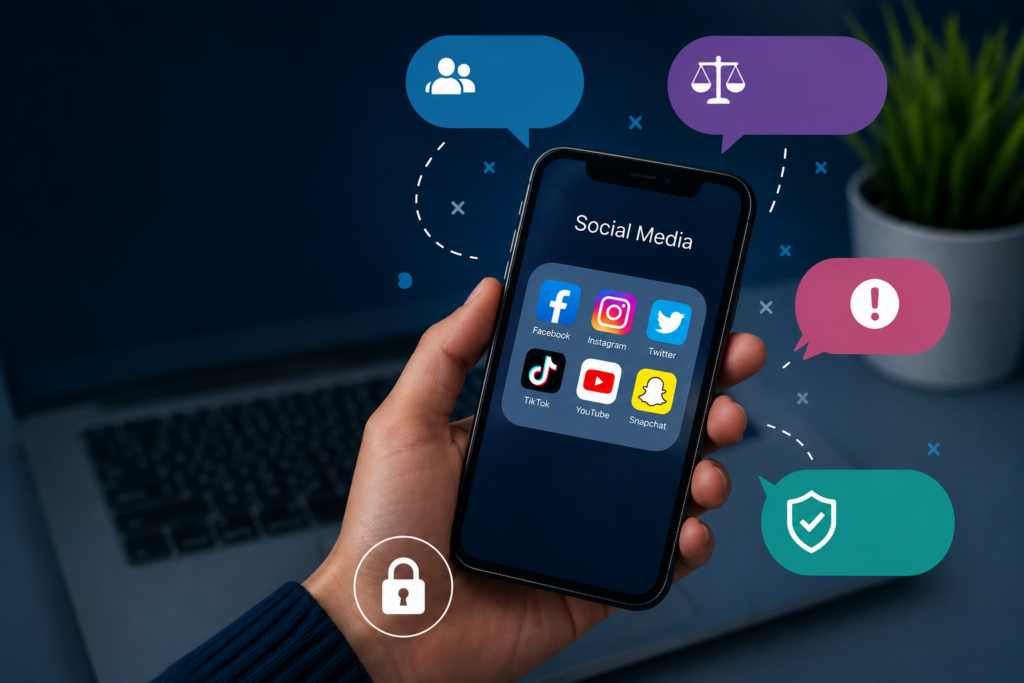
The effects of social media.
Intro:
With 70% of UK residents saying they use social media daily, and average screen time nearing 5 hours a day, many have started to ask, has social media now become a harmful influence?
Social media is huge, since its debut in the form of internet chat rooms and email messengers in the 1970s, people’s usage of these platforms has only increased. Today, it may be more recognisable in the form of popular apps like Instagram, Facebook and even TikTok.
Originally created for online connection, these virtual communities only get more addictive by the day. Algorithms are designed to keep users on their platforms, with endless feeds, doomscrolling and short-form content, and it seems to be working.
But can it be said that the bad truly outweighs the good?
The Bad
As mentioned before, social media can have a number of harmful effects on its users, and one of the biggest concerns is the way algorithms are designed to keep people engaged for as long as possible.
With studies showing that algorithmic ‘echo-chambers’ can be formed in as little as a week. According to a UCL study, “After five days, the TikTok algorithm was presenting four times as many videos with misogynistic content such as objectification, sexual harassment or discrediting women. (increasing from 13% of recommended videos to 56%).”
Children online are particularly likely to be susceptible to this media, as they often are still developing their right from wrong, and can easily begin to believe what they see online.
Another major issue is the amount of screen time social media encourages. With endless scrolling, constant notifications and short-form videos, many users can easily spend hours online without realising it. Having a horrible effect on sleep, concentration, productivity and even mental wellbeing, especially when online time begins to replace real-life hobbies and spending time with loved ones.
The Good
To say that all social media is evil and simply designed to keep you scrolling forever is not entirely fair. At its core, it remains a powerful space where people from across the world can communicate, stay in touch with loved ones, and share their lives in real time. Many friendships, relationships, and families have either started in the digital realm or are supported by it when parted by physical distance.
Social media has made new careers possible, supporting artists, YouTubers, bloggers, and even social media-specialised marketers, many of whom are able to make a living through creator programmes on these platforms.
In many ways, social media has helped make the world feel smaller, dreams more achievable, and new opportunities more accessible.
The Harm Done by Social Media | Psychology Today
In summary
Ultimately, social media cannot be put into a good or bad box; it just depends on how people choose to use it. While the benefits are great, you can create connection, opportunity and community, it can also expose users to misinformation, harmful content and addictive habits.
The best way to keep it from being harmful is to use social media responsibly. Keeping your algorithm “healthy” by engaging with positive content and not believing everything you see online, especially with the rise of misleading “AI-slop” content.
And make sure younger users are kept safe, install parental controls, screen time limits and make sure to flag up anything concerning you hear.
In the end, social media is a powerful tool, and whether it is helpful or harmful depends on the way we choose to use it.